
Healthspan vs. Lifespan: Why Living Longer Means Nothing Without Living Better. The Canada Context.
Explore the critical difference between healthspan and lifespan, and why Canada's healthcare system must shift toward preventive longevity medicine to reduce chronic disease burden.
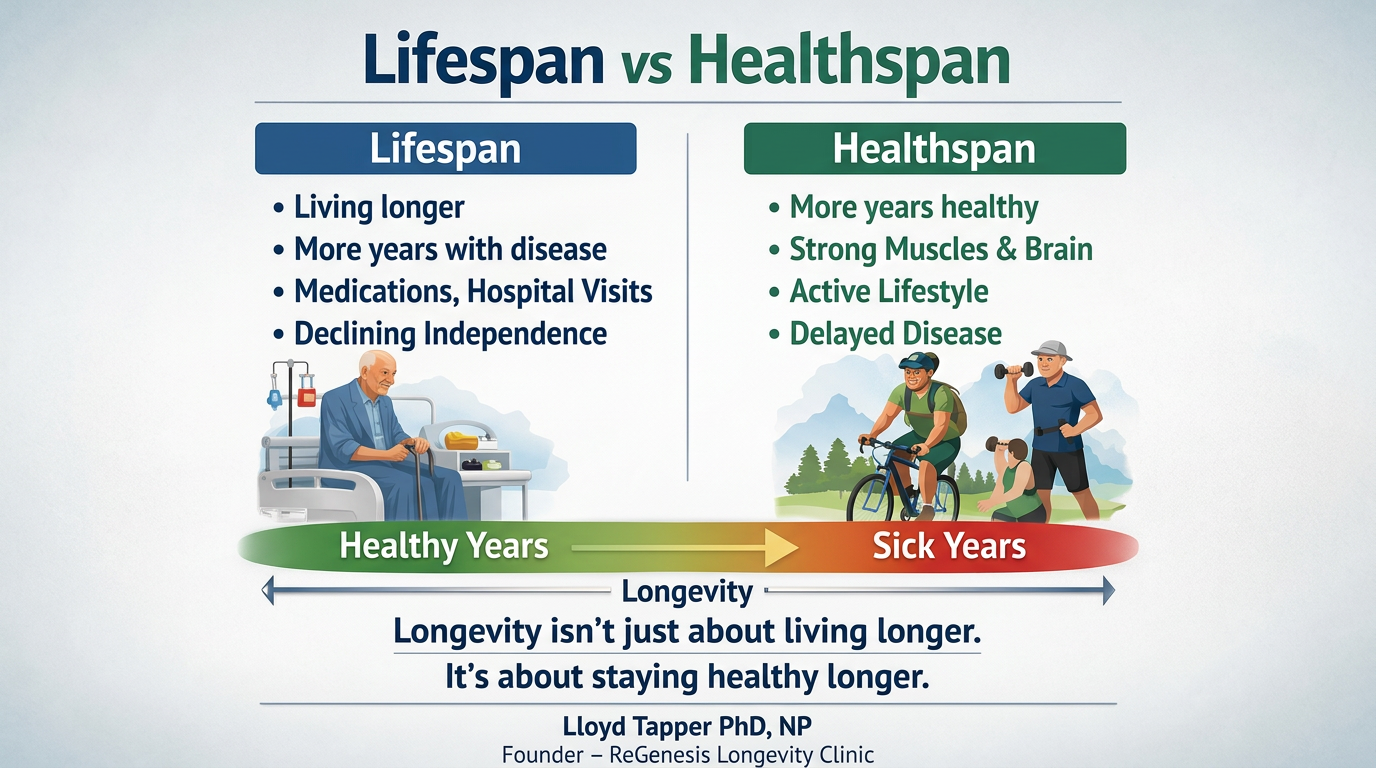
Canadians are living longer than ever before. According to Statistics Canada, the average life expectancy has risen to approximately 82 years — one of the highest in the world. On the surface, this is a triumph of modern medicine, public health infrastructure, and universal healthcare access. But beneath this encouraging statistic lies a far more troubling reality: many of those additional years are spent managing chronic illness, disability, and declining quality of life.
This is the fundamental distinction between lifespan and healthspan — and understanding it is essential for anyone who wants to live not just a long life, but a good one.
What Is Lifespan?
Lifespan is straightforward. It refers to the total number of years a person lives, from birth to death. It is the metric most commonly used to evaluate the success of a nation's healthcare system, and by this measure, Canada performs exceptionally well. Advances in emergency medicine, surgical techniques, pharmaceuticals, and infectious disease control have all contributed to steadily increasing lifespans over the past century.
However, lifespan alone tells us very little about the quality of those years. A person who lives to 85 but spends the last 15 years battling type 2 diabetes, cardiovascular disease, and cognitive decline has a very different experience than someone who remains active, sharp, and independent until their final years.
What Is Healthspan?
Healthspan refers to the number of years a person lives in good health — free from chronic disease, significant disability, and functional decline. It is the period of life during which you can move freely, think clearly, maintain independence, and enjoy the activities that give your life meaning.
The gap between lifespan and healthspan is often referred to as the "morbidity gap" or "disability period." In Canada, this gap averages approximately 10 to 12 years. That means the typical Canadian spends roughly a decade or more of their life in a state of compromised health. For many, this period involves multiple chronic conditions, frequent hospitalizations, heavy medication use, and increasing dependence on caregivers.
Closing this gap — extending healthspan to match lifespan — is arguably the most important challenge facing modern medicine.
The Canadian Healthcare System: Built to React, Not Prevent
Canada's publicly funded healthcare system is designed around acute care and disease management. When you break a bone, develop pneumonia, or suffer a heart attack, the system mobilizes effectively. Emergency departments, specialist referrals, surgical interventions, and pharmaceutical coverage are all structured to respond to health crises after they occur.
What the system does not do well is prevent those crises from happening in the first place. Preventive care in Canada is largely limited to basic screenings — mammography, colonoscopy, Pap tests, and routine blood work — that check for a narrow set of conditions. There is little infrastructure for comprehensive health optimization, early biomarker detection, or personalized prevention protocols.
This reactive model has significant consequences. Chronic diseases — including heart disease, diabetes, cancer, and neurodegenerative conditions — account for approximately 89% of all deaths in Canada and consume roughly 67% of total healthcare spending. The Canadian Institute for Health Information estimates that chronic disease management costs the system over $190 billion annually. Much of this spending addresses conditions that could have been prevented, delayed, or mitigated through earlier intervention.
Why the Healthspan Gap Is Growing
Several factors are widening the gap between how long Canadians live and how well they live during those years.
First, the population is aging rapidly. By 2030, nearly one in four Canadians will be over the age of 65. An aging population means more people entering the years where chronic disease risk is highest, placing enormous pressure on an already strained healthcare system.
Second, lifestyle-related risk factors are increasing. Rates of obesity, physical inactivity, poor nutrition, and chronic stress have all risen over the past two decades. These factors are primary drivers of the chronic diseases that erode healthspan.
Third, the healthcare system's emphasis on disease treatment over prevention means that many conditions are caught late — after they have already caused significant damage. Type 2 diabetes, for example, is often diagnosed years after metabolic dysfunction has begun, by which point complications affecting the eyes, kidneys, nerves, and cardiovascular system may already be underway.
Longevity Medicine: A New Paradigm for Canadian Health
Longevity medicine offers a fundamentally different approach. Rather than waiting for disease to develop and then treating it, longevity medicine focuses on identifying and addressing the root causes of aging and disease at the earliest possible stage — often years or decades before symptoms appear.
This approach uses advanced diagnostic tools that go far beyond standard medical testing. Comprehensive blood panels analyzing 500 or more biomarkers can detect metabolic dysfunction, hormonal imbalances, nutrient deficiencies, and inflammatory markers long before they manifest as clinical disease. Full-body MRI screening can identify tumors, aneurysms, and organ abnormalities at their earliest and most treatable stages. Epigenetic testing can measure biological age — the true pace of cellular aging — and track whether interventions are effectively slowing the aging process.
Liquid biopsy technology can detect circulating tumor DNA from over 50 cancer types through a simple blood draw, catching cancers that have no standard screening method. Genetic testing can identify hereditary risk factors, allowing for targeted surveillance and prevention strategies.
The Economic Case for Extending Healthspan
Beyond the profound personal benefits, extending healthspan makes compelling economic sense for Canada. Every year that a person remains healthy and productive is a year they contribute to the economy through work, taxes, and community participation — rather than consuming healthcare resources.
Research published in The Lancet suggests that even a modest one-year increase in average healthspan could save healthcare systems billions of dollars annually while significantly improving population well-being. For Canada, where healthcare costs are projected to consume an ever-larger share of provincial budgets, investing in healthspan extension is not just good medicine — it is sound fiscal policy.
Private preventive health services, such as those offered at longevity clinics, complement the public system by catching what standard care misses. Individuals who invest in comprehensive screening and optimization often avoid the hospitalizations, surgeries, and chronic disease management that place the heaviest burden on the public system.
What You Can Do to Extend Your Healthspan
While systemic change in Canadian healthcare will take time, individuals can take immediate steps to close their personal healthspan gap. The most impactful actions include comprehensive baseline testing to understand your current health status at a molecular level, optimizing key biomarkers through targeted nutrition, exercise, sleep, and supplementation, regular advanced screening to catch potential problems before they become serious, hormonal optimization to maintain vitality and function as you age, and ongoing monitoring to track progress and adjust protocols based on results.
These are not luxuries. They are the tools of proactive healthcare — the kind of care that keeps you out of the emergency room, off chronic medications, and living independently for as long as possible.
The Bottom Line: Years Matter, But Quality Matters More
Canada has succeeded in extending lifespan. The next frontier is extending healthspan — ensuring that the years we add to life are years worth living. This requires a shift in thinking, from managing disease to preventing it, from reactive care to proactive optimization, and from measuring success by how long we live to measuring it by how well we live.
At ReGenesis Longevity Clinic™, we are committed to helping Canadians bridge the gap between lifespan and healthspan. Through advanced diagnostics, personalized protocols, and ongoing monitoring, we provide the tools and guidance you need to live longer and live better. Because adding years to your life only matters if you can add life to your years.
From Reactive Care to Proactive Healthspan
Closing the gap between lifespan and healthspan in Canada will require a meaningful shift away from purely reactive medicine toward proactive, individualized, data-driven care. That means earlier and more comprehensive measurement, more emphasis on the lifestyle pillars that drive long-term outcomes, and integrated use of advanced diagnostics where they add real clinical value.
It also means rethinking what 'healthy' means at every age. Healthy is not the absence of diagnosed disease at the time of a visit; it is functional capacity, metabolic resilience, cognitive clarity, and quality of life sustained across decades. That is the standard longevity medicine is built around — and it is the standard Canadians deserve from their long-term care.
What This Means for Canadians
Reframing 'Healthy'
For decades, the working definition of 'healthy' in Canadian primary care has effectively meant the absence of diagnosed disease at the time of a visit. That definition is no longer adequate. Healthy in the modern, healthspan-oriented sense means functional capacity, metabolic resilience, cognitive clarity, and quality of life sustained across decades — not merely the temporary absence of a label.
Why Individual Action Matters
While systemic reform of Canadian healthcare will take years, individuals do not have to wait. The lifestyle pillars that drive healthspan — structured exercise, nutritional adequacy, consistent sleep, stress regulation, and engaged social connection — are within reach today, and their compounding effect over years is substantial. Comprehensive longevity assessments, where appropriate, can supplement these foundations with personalized data and targeted interventions.
Where Longevity Clinics Fit
Private longevity-focused clinics are not a replacement for the public system; they are a complement that focuses specifically on the proactive, individualized, healthspan-oriented dimension of care. The public system remains essential for acute illness, chronic disease management, urgent care, and the broad spectrum of primary care services. Longevity clinics fill a different — and increasingly important — niche: the proactive, longitudinal optimization of healthspan.
Building a Healthspan-First Mindset
The shift from a lifespan-focused to a healthspan-focused mindset is, in many ways, the most important change individuals can make. It reframes daily decisions — about sleep, food, movement, stress, and the foundational pillars of long-term health — as deliberate investments in the years ahead, rather than as obligations or constraints. Over decades, that reframing compounds into outsized differences in function, vitality, and quality of life.
It also changes the relationship many Canadians have with their healthcare. Rather than waiting passively for an annual visit and reacting to whatever the test results happen to show, a healthspan-first mindset is proactive: comprehensive baseline measurement, structured follow-up, individualized intervention, and continuous refinement over years. That orientation is not the responsibility of the public system to deliver — but it is increasingly available through longevity-focused care, and the patients who engage with it consistently report meaningful improvements in how they feel, function, and age.
The Canadian healthcare system will continue to evolve. Some changes will come quickly; many will take years. In the meantime, individuals do not have to wait for systemic reform to begin extending their own healthspan. The tools, the evidence, and the structured clinical programs are available today — and the long-term return on engaging with them is substantial.